
The American Project in France
Being and NothingnessThis thread follows a collective political project that gives a shared past a new meaning in order to justify present action.
increasing Bearing strength in each event
 decreasing
Bearing strength in each eventdecreasingEntering a War
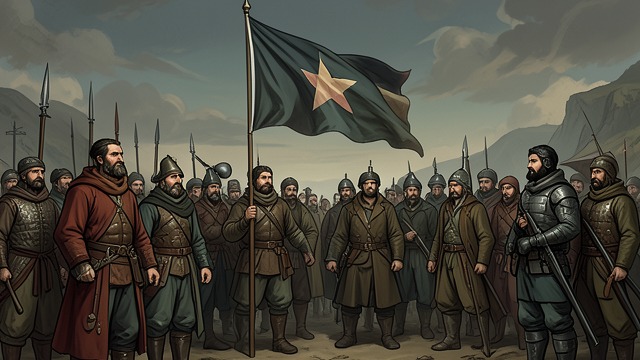
Entering a War
Political Choice
A nation may join a war for material interests, alliances, or a publicly declared moral debt. The project selects which motives become causes.
Meaning
The decision is not explained by the circumstances alone. A future end makes some features of the situation decisive.
A Shared Past Recalled
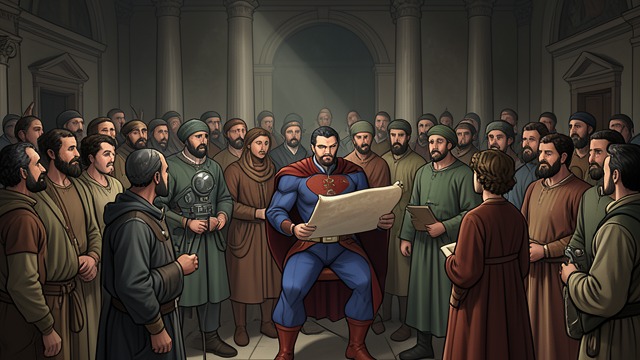
A Shared Past Recalled
Public Memory
A political speech can invoke an earlier relationship between peoples to give the present action the form of repayment.
Historical Construction
The memory does not invent past events, but it arranges them into a meaningful lineage that supports the current project.
The Past as Motive
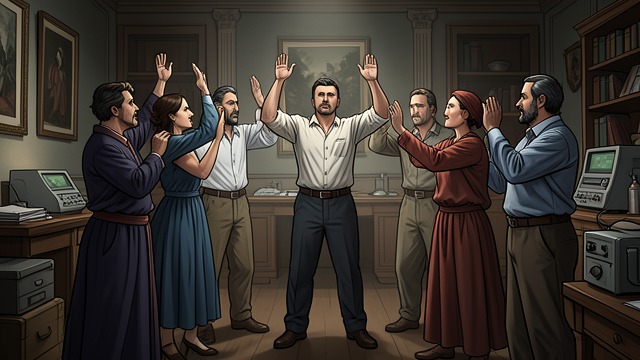
The Past as Motive
Recovery
An event becomes a motive only when a present project recovers it as relevant. The past does not act by itself.
Contest
Different projects can use the same history to justify opposite choices, exposing the freedom within collective memory.
A Counterfactual Alliance
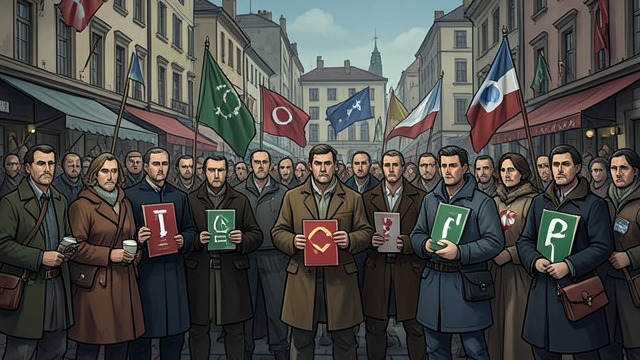
A Counterfactual Alliance
Another Project
The same political circumstances could be reorganized around a different national end. Another alignment would call forth different memories and symbols.
Limits
The alternative cannot change the actual past, but it shows that historical meaning is not mechanically fixed by it.
A History Still Open
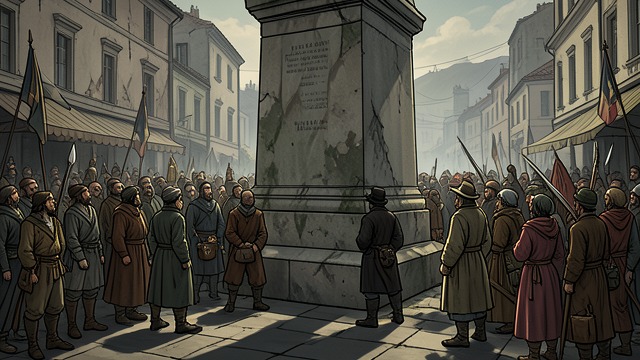
A History Still Open
No Final Verdict
Historical acts remain open to reinterpretation while living projects continue. No generation owns the last word on the past.
Responsibility
Collective memory is a choice with consequences, not a neutral report detached from action.
Part Four, Chapter One, reference to 1917
Part Four, Chapter One, discussion of Lafayette
Part Four, Chapter One, discussion of motives and historical meaning
Part Four, Chapter One, discussion of alternative political histories
Part Four, Chapter One, conclusion of political examples
